
Every tax season starts the same way — you open the income tax portal feeling confident, and then the questions begin. “Where is my Form 16?” “Do I need AIS?” “What about my mutual fund sale?” Missing documents are one of the biggest reasons ITR filing gets delayed or ends up with errors. Here’s a complete checklist to keep handy before you start filing for FY 2025-26 (AY 2026-27).
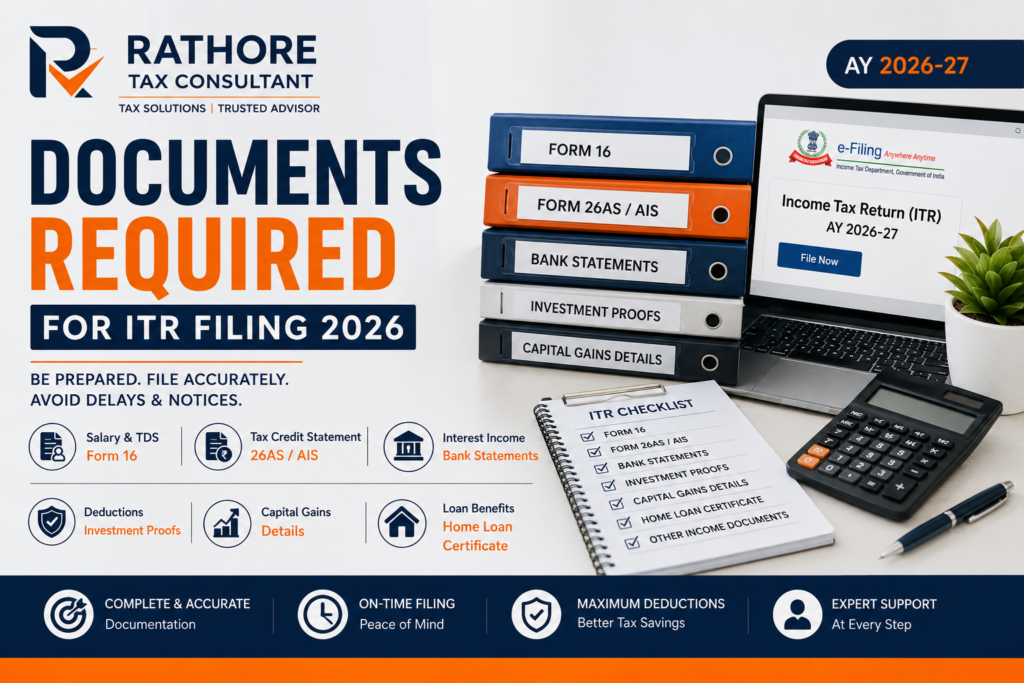
Documents Every Taxpayer Needs
Regardless of your income source, keep these ready:
- PAN Card — your primary tax identification document
- Aadhaar Card — must be linked with PAN
- Bank account details — all active accounts, with at least one pre-validated for refunds
- Form 26AS — your tax credit statement, downloadable from the income tax portal
- AIS (Annual Information Statement) & TIS (Taxpayer Information Summary) — gives a complete picture of your financial transactions and helps catch mismatches before you file
AIS has become increasingly important in recent years — it captures far more than the traditional Form 26AS, including high-value transactions, dividend income, and mutual fund activity. Always cross-check your AIS before filing to avoid future notices.
For Salaried Employees
- Form 16 — issued by your employer, usually by 15th June, detailing your salary and TDS
- Salary slips — for cross-verification against Form 16
- Rent receipts — if claiming HRA exemption
- Home loan interest certificate — from your bank, if applicable
- Investment proofs — for deductions under Section 80C (PPF, ELSS, life insurance), Section 80D (health insurance premiums), and other applicable sections
For Freelancers, Professionals & Business Owners
- Profit & loss statement and balance sheet (or income-expense summary, if not maintaining formal books)
- GST returns, if registered
- Bank statements for the full financial year, across all business accounts
- Invoices raised and expense bills
- TDS certificates received from clients (Form 16A)
If You Have Capital Gains
- Capital gains statement from your broker or mutual fund platform — for shares, mutual funds, or SIPs sold during the year
- Property sale/purchase deed — if you sold immovable property, along with details of the cost of acquisition and improvement
- Details of any other assets sold — jewellery, bonds, etc.
For Interest, Dividend & Other Income
- Interest certificates from banks and post office (savings account, FDs, RDs)
- Dividend statements from your demat account or registrar
- Details of any other income — freelance income, rental income, family pension, etc.
For Property Owners
- Municipal property tax receipts
- Rental agreement and rent received details, if the property is let out
- Co-owner details, if the property is jointly owned
For NRIs
- NRE and NRO account statements
- Residency certificate/proof, to determine your correct residential status
- Details of income earned or accrued in India
A Quick Tip Before You Start
Don’t rush to file the very first week the portal opens. Experts increasingly recommend waiting until your AIS, TDS credits, and Form 26AS are fully updated and reconciled — filing too early, before your data has settled, is one of the most common reasons taxpayers later have to file a revised return.
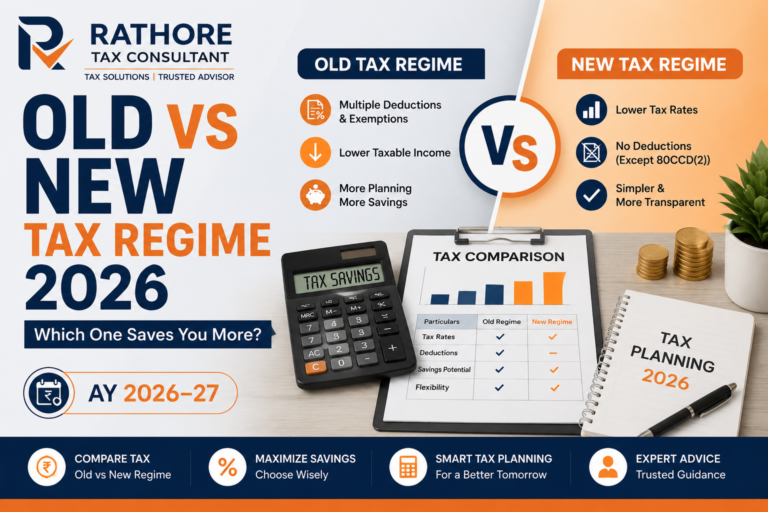
Also, remember: the documents you need to arrange for deduction proofs (80C, 80D, home loan interest, HRA) only matter if you’re opting for the old tax regime. If you go with the new regime, most of these deduction-related documents aren’t required — though you should still keep them handy in case you decide to compare both regimes before filing.
Let Us Handle the Paperwork For You
Gathering the right documents is half the battle — the other half is knowing where each one goes and which deductions you’re eligible for. At Rathore Tax Consultant, we help you organise your documents, reconcile AIS/26AS mismatches, and file an accurate, complete return the first time.
📞 Get a free document checklist review: +91-9643372077 🌐 Or book your slot through our website rathoretaxconsultant.com.
FAQs
Q1. Is Form 16 mandatory to file ITR? No, Form 16 isn’t mandatory — you can file without it if you have all the necessary income and TDS details. However, it’s a very convenient reference document, especially for salaried employees.
Q2. What is the difference between Form 26AS and AIS? Form 26AS shows your tax credits (TDS/TCS deducted). AIS is broader — it also includes interest, dividends, mutual fund transactions, and other high-value financial activity, giving a more complete financial picture.
Q3. Do I need investment proofs if I’m filing under the new tax regime? Most deduction-related documents (80C, 80D, HRA) aren’t required under the new regime, since these deductions aren’t available there. It’s still a good idea to keep them handy in case you want to compare both regimes.
Q4. What documents are needed for capital gains reporting? A capital gains statement from your broker or mutual fund platform, along with purchase/sale details for any property, shares, or other capital assets sold during the year.