
Filing an Income Tax Return (ITR) isn’t just a legal requirement — it’s also good financial practice. Many people and small business owners in Delhi assume the process is complicated, but with the right guidance, it can be simple and stress-free. Here’s a complete, step-by-step breakdown so you can file your return confidently this year.
Why Filing ITR Matters
Beyond being a legal obligation, filing your ITR on time keeps your finances transparent and works in your favour. Timely filing helps you:
- Avoid penalties and late fees
- Claim a tax refund without delays
- Maintain a clean financial record for loan and visa applications
- Stay compliant with Indian tax regulations
Documents Required for ITR Filing
Before you begin, gather these documents:
- PAN card and Aadhaar card
- Form 16 (for salaried employees)
- Bank statements and interest certificates
- TDS certificates and Form 26AS / AIS
- Investment proofs (LIC, PPF, ELSS, insurance premiums, etc.)
- Business income records (for freelancers and self-employed individuals)
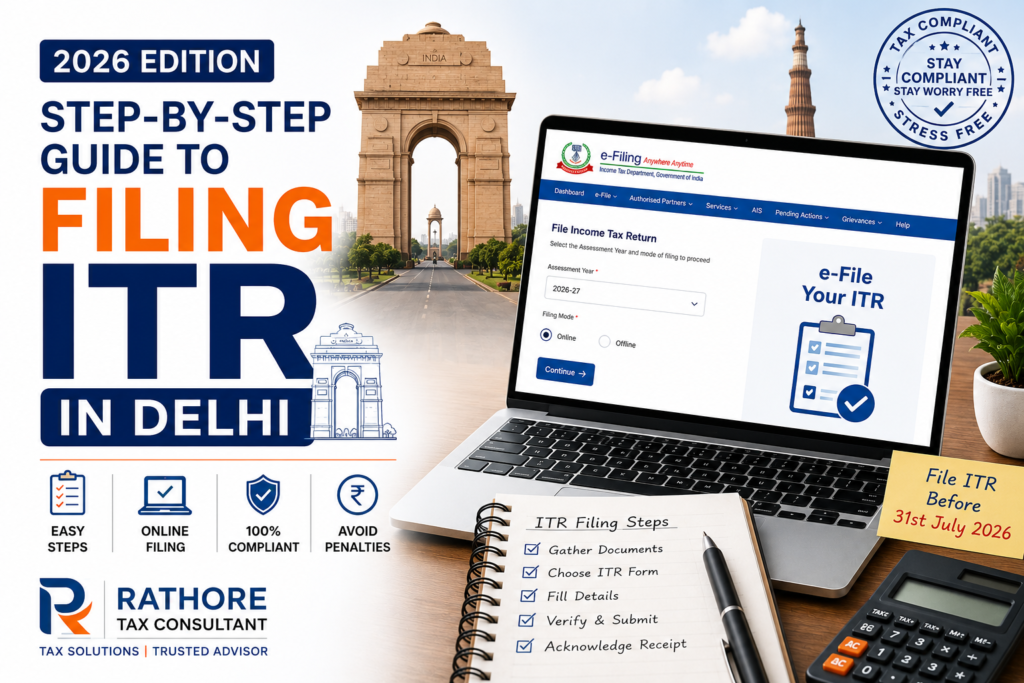
Step-by-Step ITR Filing Procedure
Step 1: Log in to the income tax portal Visit www.incometax.gov.in and log in using your PAN as your user ID, along with your password or Aadhaar OTP.
Step 2: Select the appropriate ITR form
- ITR-1: For salaried individuals with income up to ₹50 lakh, including income from up to two house properties
- ITR-2: For individuals with capital gains or income not covered under ITR-1
- ITR-3: For business and professional income (non-presumptive)
- ITR-4: For taxpayers opting for the presumptive taxation scheme
Step 3: Choose your tax regime Decide between the old and new tax regimes before entering your income details — this choice affects which deductions you can claim, so it’s worth comparing both based on your actual investments and expenses rather than assuming one is automatically better.
Step 4: Enter your income and deduction details Fill in income from salary, business, investments, and interest. Cross-check every figure against your bank statements, Form 16, and Form 26AS/AIS to avoid mismatches that could trigger a notice later.
Step 5: Confirm your tax liability The portal will calculate whether you’re due a refund or owe additional tax based on the details you’ve entered. Review this carefully before proceeding.
Step 6: Submit and e-verify your return After submission, e-verify your return using Aadhaar OTP, net banking, or your bank account’s EVC. This step is mandatory — an unverified return is treated as not filed at all, so don’t skip it.
Common Mistakes to Avoid
- Filing under the wrong ITR form
- Forgetting to link Aadhaar with PAN
- Missing interest income from savings accounts or fixed deposits
- Not e-verifying the return after submission
- Filing late and attracting a penalty of up to ₹5,000
Filing your ITR doesn’t have to be stressful. Following the steps above will get you through the process smoothly — but if anything feels uncertain, working with a professional tax consultant can save you time and help you avoid costly mistakes.
Need Help Filing Your ITR in Delhi?
At Rathore Tax Consultant, we help individuals and businesses across Delhi NCR file accurately and on time, every year.
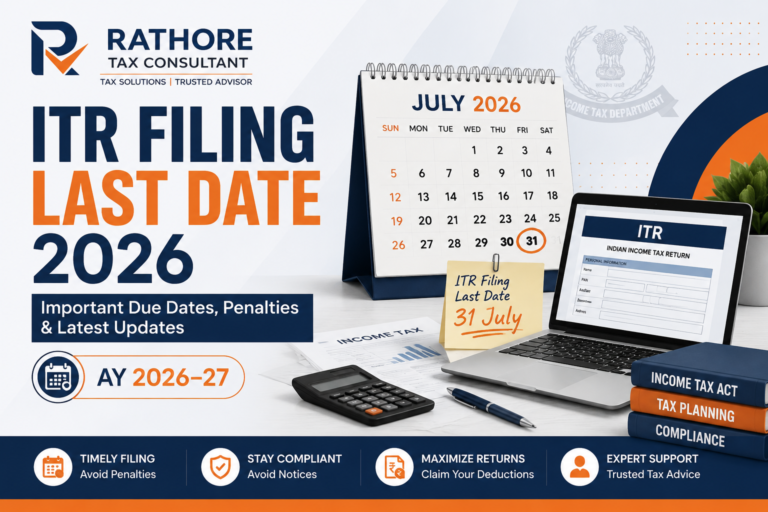
👉 Don’t wait until the last date — 31st July 2026 for salaried individuals filing ITR-1/ITR-2 (AY 2026-27). Get in touch today and let’s make your filing simple and accurate.
📞 Call/WhatsApp: +91 96433 72077 📧 Email: amit.rathour56@gmail.com 🌐 Visit: rathoretaxconsultant.com
This article reflects ITR filing rules for AY 2026-27 as understood at the time of publishing. Please confirm your specific filing requirements with our team before relying solely on this guide.